Wondering where to start if you want the right mix of home style, setting, and everyday convenience in McMinnville? You are not alone. Whether you are buying your first home, moving across town, or planning your next chapter, it helps to understand how McMinnville’s older neighborhoods, historic core, and newer growth areas each offer something different. This guide will walk you through the home styles and neighborhood patterns you are most likely to see so you can narrow your search with more confidence. Let’s dive in.
McMinnville Housing at a Glance
McMinnville offers a broad housing mix rather than a one-size-fits-all market. According to the latest Census QuickFacts, the city has 12,795 households, a 62.9% owner-occupancy rate, a median owner-occupied home value of $432,800, and median gross rent of $1,380.
That variety matters when you begin your search. City planning documents highlight a range of housing types, including detached homes, duplexes, triplexes, quadplexes, cottage clusters, and townhouses. In other words, your options may include much more than a traditional single-family house.
Historic Homes Near Downtown
If you love older architecture and being close to downtown, the historic core is often the first place to explore. McMinnville’s historic-preservation program recognizes about 500 properties, and the city says some historic resources date back to 1853.
The downtown area is also a National Historic District. Third Street is described by the city as the spine of downtown, which helps explain why the blocks closest to it feel especially connected to McMinnville’s historic identity.
Victorian and Queen Anne Styles
Near downtown and the immediately surrounding streets, you are likely to find some of McMinnville’s most distinctive late-19th-century homes. City historic resource pages identify examples such as the Grissen House, the Frank E. Rodgers House, and the Samuel Cozine House as Queen Anne or Queen Anne Victorian.
For buyers, that often means more architectural detail, more visual character, and a stronger sense of place. These homes can stand out for their exterior design and period features, especially compared with newer construction.
Italianate Influence Downtown
Historic character in McMinnville is not limited to houses alone. The city also identifies downtown buildings such as the Knights of Pythias Building and McMinnville Bank as Italianate examples.
That architectural backdrop shapes the feel of the surrounding area. If you want a neighborhood experience tied closely to downtown’s older streetscape, this part of town may be especially appealing.
What to Know About Historic Review
Historic charm can come with extra rules. The city says most exterior alterations to properties on the Historic Resources Inventory go through formal review.
That does not mean a historic home is the wrong fit. It simply means you should go in with clear expectations about maintenance, updates, and any review process that may apply if the property is a designated historic resource.
Established In-Town Neighborhoods
As you move farther from the downtown core, McMinnville continues to offer older residential streets with a wide mix of home styles. These established in-town areas often blend early architectural character with later remodels and infill.
For many buyers, this can be a sweet spot. You may find older homes with personality, but in a setting that feels more residential and less tied to downtown preservation rules.
Craftsman and Bungalow Homes
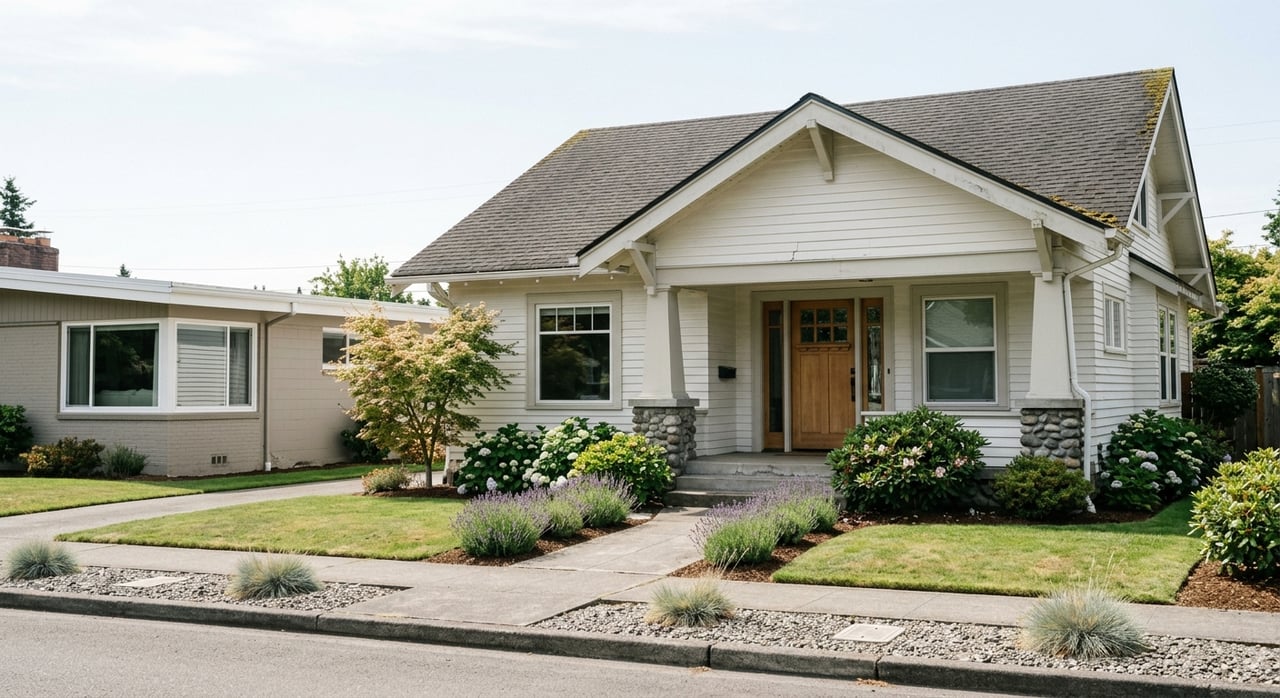
The city’s historic inventory shows strong early-20th-century representation in these neighborhoods. For example, 535 NE Cowls Street is described as a well-preserved Craftsman from 1912, and another survey entry is noted as one of McMinnville’s finest bungalow examples.
If you are drawn to practical layouts and classic design details, these styles are worth watching for. In established neighborhoods, they may appear alongside homes that have been updated over time, giving you a range of condition and finish levels.
Revival and Tudor Styles
McMinnville’s older residential grid also includes revival-era architecture. City survey entries identify examples of Neo-Colonial and Georgian Revival as well as English Tudor.
That variety is a big part of what makes in-town house hunting here interesting. You may see different lot sizes, exterior styles, and remodeling histories even within a relatively small area.
Newer Neighborhood Options
If your priority is newer construction or a more contemporary neighborhood layout, McMinnville’s growth areas deserve a close look. Newer residential options are especially visible at the city’s edges, where planning efforts are shaping future neighborhoods.
These areas can offer a different feel from the historic core. Instead of older homes and preservation context, you may find more recently built homes, attached housing, and development plans designed around a mix of housing types.
West, Southwest, and Northeast Growth Areas
The city points to several areas tied to newer neighborhood growth. West Hills Neighborhood Park opened in 2010, and Chegwyn Farms Neighborhood Park opened in 2011 in northeast McMinnville on the larger Chegwyn conservation easement.
The Southwest Area Plan adds even more context. The city says the southwest urban growth boundary area was added in 2020, covers about 640 acres, and is intended to guide new neighborhoods with varied housing types, neighborhood commercial uses, school and park sites, and greenways plus walking and biking trails.
Townhomes, Cottages, and Duplexes
If you are wondering whether attached homes are part of the local market, the answer is yes. City files show townhouse, duplex, cottage, and multi-dwelling projects in both planned developments and infill settings.
Examples in growth areas help show that mix in real terms. Dunn Place includes a 21-lot subdivision and townhouse development, Stratus Village is a 175-unit multi-dwelling project, and Chegwyn Village filings include bungalows, cottages, and duplex conversions.
How to Compare McMinnville Neighborhoods
Choosing the right part of McMinnville usually comes down to matching your priorities with the kind of housing and setting you want. Instead of asking which neighborhood is best, it is often more helpful to ask which trade-offs fit your goals.
A buyer focused on architectural character may look very differently at the market than someone prioritizing newer layouts or attached-home options. The city’s housing mix supports several paths, which is good news if you want choices.
Historic Core Trade-Offs
Homes near downtown often offer the strongest historic feel and the easiest connection to Third Street and surrounding blocks. You may also see some of the city’s most distinctive Queen Anne, Victorian, and Italianate architecture there.
At the same time, older homes can bring older systems, more upkeep, and possible review requirements for exterior changes. If you love charm, it is smart to balance that excitement with practical due diligence.
Established Neighborhood Trade-Offs
Established in-town neighborhoods can offer a mix of older styles, mature residential streets, and a wider range of home updates. You may find Craftsman, bungalow, Tudor, and revival-era homes mixed with remodels and infill.
This variety can be a plus if you want options. It can also mean you need to compare homes carefully, because age, condition, and lot character may vary quite a bit from one block to the next.
Newer Area Trade-Offs
Newer neighborhoods and planned developments often provide broader housing choice, including middle-housing types. They may appeal to buyers looking for more contemporary housing forms or those who want to consider townhomes, cottages, or duplex-style options.
The feel will usually be different from the historic core. If your focus is less about period architecture and more about newer neighborhood planning, these areas may rise to the top of your list.
A Simple Way to Narrow Your Search
If you are still deciding where to begin, try sorting McMinnville into three broad categories. This can make your home search feel more manageable right away.
- Historic core: Best for buyers drawn to downtown access and older architectural character
- Established in-town neighborhoods: Best for buyers who want older homes on residential streets with varied styles and updates
- Newer growth areas: Best for buyers exploring newer housing forms, planned development, and middle-housing options
This kind of short list can save you time. Once you know which setting fits your goals, it becomes much easier to compare actual homes.
If you want help sorting through McMinnville’s home styles and neighborhood options, working with a local guide can make the process feel a lot clearer. Stacey McGhehey brings steady, friendly guidance to every step, helping you compare neighborhoods, understand trade-offs, and move forward with confidence. Smile! Relax! Enjoy!
FAQs
What home styles are common in McMinnville, Oregon?
- McMinnville buyers are likely to see Queen Anne, Victorian, Italianate, Craftsman, bungalow, Neo-Colonial, Georgian Revival, Tudor, townhomes, cottages, duplexes, and other middle-housing types depending on the area.
Where are the oldest homes in McMinnville?
- The oldest and most distinctive homes are generally found near downtown and the streets immediately surrounding it, where the city identifies many historic resources and late-19th-century architectural examples.
Do McMinnville historic homes have extra rules?
- Often yes. The city says most exterior alterations to properties on the Historic Resources Inventory go through formal review.
Are there newer neighborhoods in McMinnville, Oregon?
- Yes. Newer neighborhood-style options are visible in west, southwest, and northeast growth areas, including areas associated with West Hills, Chegwyn Farms, and the southwest urban growth boundary expansion.
Are townhomes and duplexes part of the McMinnville market?
- Yes. City planning and project files show townhouses, duplexes, cottages, and multi-dwelling housing in both planned developments and infill contexts.
How should buyers compare McMinnville neighborhoods?
- A helpful approach is to compare whether you want historic charm near downtown, an established in-town residential street, or a newer growth-area setting with more contemporary housing options.