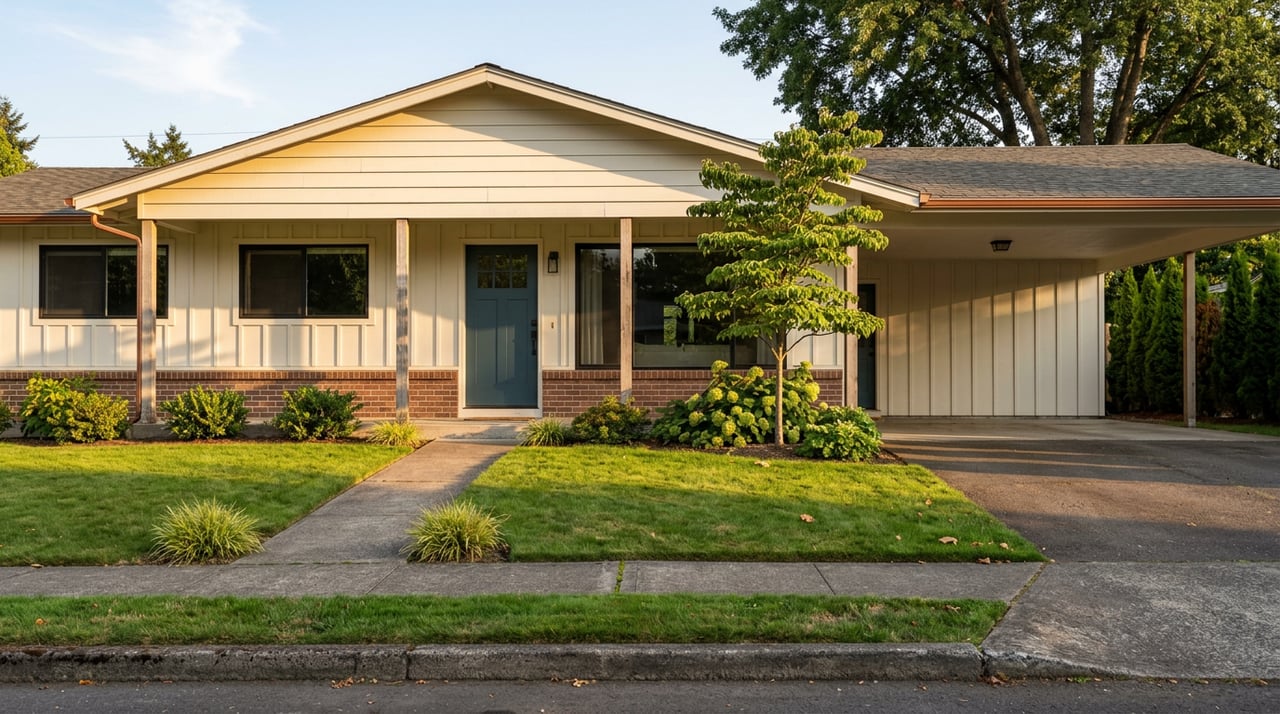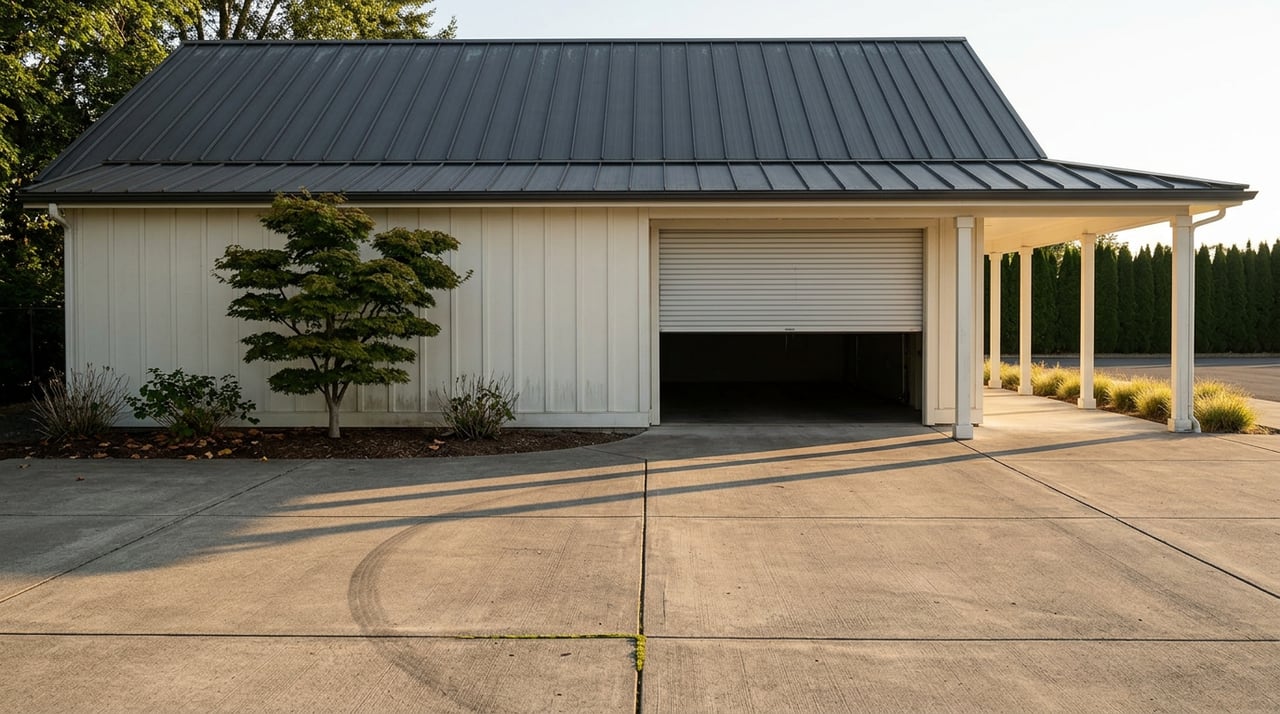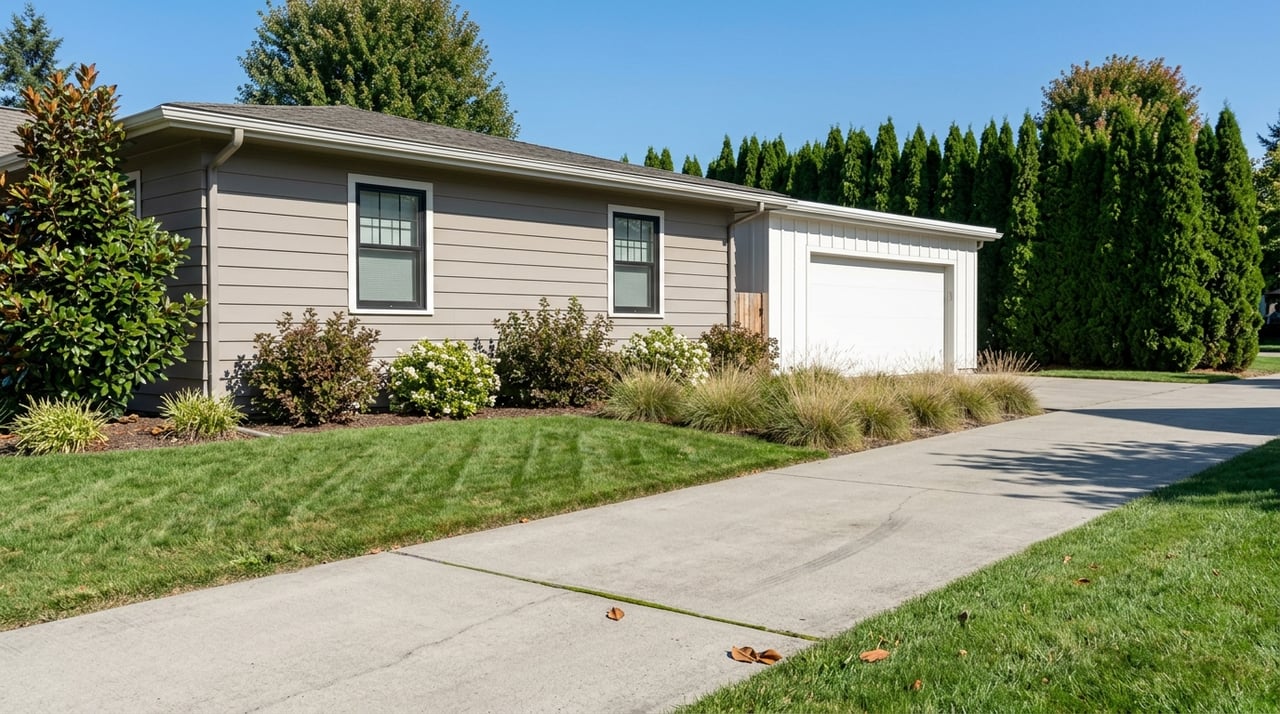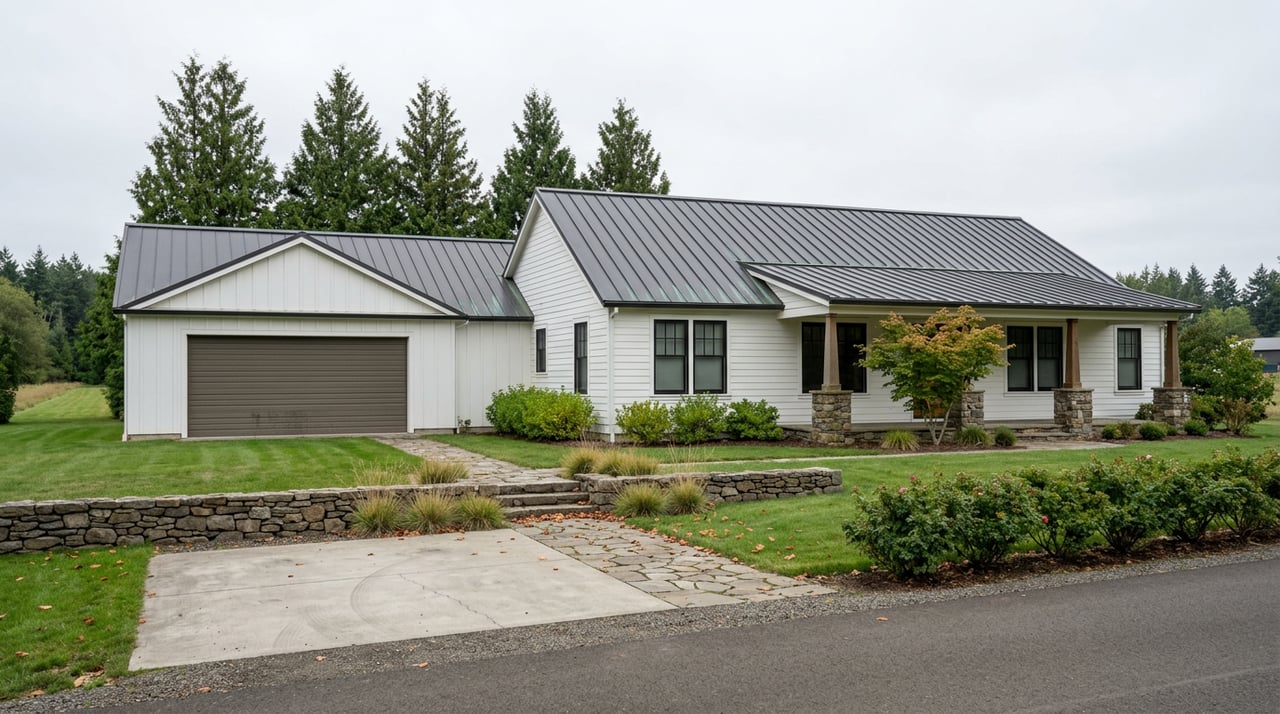
Before you write an offer at Workman Airpark, there's a due diligence question that won't show up on a standard inspection checklist: who controls the airspace your runway sits inside, and what are they planning to do with it?
Workman Airpark, designated OR41 by the FAA, is a small, private community about four miles south of Canby. It has 24 homes on one-acre lots, each with access to a shared turf runway, and it has run that way since it was established in April 1974. The HOA describes it plainly on its own site as a place offering a rare blend of aviation lifestyle and community spirit. That part is true and it's the part most buyers already know before they call an agent.
What fewer buyers know is that Workman's daily flying life doesn't start and end at its own fence line. Five nautical miles northwest sits Aurora State Airport, and Aurora is in the middle of a five-year, court-tested fight over its own future that comes to a head this December.
A Small Runway, A Borrowed Sky
Workman's runway, 07/25, is 2,240 feet of turf with low-intensity edge lighting. There's no control tower, no METAR reporting, and no published instrument approach, which means every arrival and departure happens under visual flight rules. According to the HOA's own operational notes, pilots get their weather from Aurora State's ASOS on 118.525 MHz, and any pilot heading westbound out of Workman is told to monitor Aurora's ATIS and check in with the tower on 120.35 MHz before crossing into controlled airspace.
That's not a technicality. It means Workman's flying pattern is built around a neighbor's tower schedule, a neighbor's frequencies, and a neighbor's airspace boundary. The HOA describes Workman as sitting just east-southeast of Aurora, just outside the Class D shelf during tower hours, with the airspace reverting to Class E once the tower closes for the night. That boundary was drawn in 2015, when Aurora's new control tower and Class D airspace went active and pilots across the region had to relearn the sky around Salem's growing corridor. Lenhardt Airpark got a formal cutout written into that same rule so its own pattern wouldn't collide with Aurora's approach corridors. Workman didn't need one. It sits just outside the line as drawn. That's a fine arrangement today. It's also an arrangement that depends on the line staying where it is.
Why Aurora Keeps Ending Up in Front of a Board
Aurora State Airport is owned by the Oregon Department of Aviation, and federally obligated airports like it are required to update their master plans roughly every ten to twenty years. Aurora's last attempt at one, from 2012, didn't hold up. The Oregon Court of Appeals ruled it was never lawfully approved, and that ruling is part of why a new Planning Advisory Committee was seated in November 2021 to start the process again.
That committee met nine times over the better part of four years. It produced a Draft Final Airport Master Plan on August 29, 2025, which went out for agency and public review. In June 2025, the mayors of Aurora and Wilsonville sent a joint letter to the Governor's office asking for intervention, citing years of process concerns. By December 2025, Oregon's aviation agency confirmed in a public bulletin that it intended to bring the plan to the Oregon Aviation Board for a vote sometime in 2026, with a public hearing in Salem required at least 30 days in advance.
The board's own published meeting schedule, tracked publicly by a citizens group following the process, lays out what comes next:
- December 1 and 2, 2026: board training, an airport site visit, and public comment sessions
- December 3, 2026: public testimony, board discussion, and a vote on adoption
From where you're sitting today, that's less than three months away.
The Argument Underneath the Argument
The plan under consideration includes a proposed runway extension of roughly 500 feet, to about 5,500 feet, which would let larger, heavier aircraft use the field. Supporters point to the FAA's 20-year planning requirement as the reason a new plan is needed at all. Opponents, including the cities of Aurora and Wilsonville, 1000 Friends of Oregon, and Friends of French Prairie, argue the growth forecast behind that extension is built on a shakier foundation than it looks. Their objection is a specific one: the agency's forecast ties future airport operations to Marion and Clackamas County population growth, projecting 0.9 percent annual growth in operations, rather than to the standard FAA contract-tower forecast model used at comparable Oregon airports, which projects 0.6 percent. That difference compounds over 20 years into a materially bigger airport than the standard model would predict.
Why would a county-level population model matter more to a state aviation agency than actual flight data? Wilsonville's city government, which has opposed the plan throughout, points to a structural reason: it says the Oregon Department of Aviation's main revenue source is a tax on aviation fuel, so more operations at a state-owned field like Aurora mean more revenue for the agency itself. That's the city's characterization, not an independently audited fact, but it's exactly the kind of detail that explains why a routine-sounding planning document has drawn years of legal and political pushback instead of a quiet rubber stamp.
None of this changes who owns Workman's runway or how its HOA operates. What it does change, if the board adopts the plan as drafted, is the volume and character of traffic in the corridor Workman shares airspace with, and potentially the practical margin between Workman's pattern and Aurora's Class D shelf. If the board declines to adopt it, or if it ends up back in court the way the 2012 version did, the corridor stays roughly as it is today. Either way, a buyer signing paperwork this fall is buying into an outcome that won't be settled until after closing.
What Your Money Buys Nearby Right Now
Canby's asking prices have been easing through the summer, not spiking. The city's median list price ran $689,000 in May 2026, $674,000 in July, and $672,000 in August, a gentle three-month slide rather than a sharp correction. That's the backdrop a one-acre aviation lot competes against, and it's worth knowing before you anchor to a single number from a single month.
Workman itself doesn't trade often enough to have its own reliable monthly trend. With 24 homes total, a listing there is a rare event, and it tends to move through word of mouth among pilots and current owners as much as through the open market. When you are comparing what a hangar lot costs against what an ordinary Canby home costs, use the citywide asking-price trend as your baseline, then expect a runway-access premium on top of it, the same way you'd expect a premium for river frontage or a finished shop building elsewhere in Clackamas County.
Questions Worth Raising Before You Write an Offer
- Which entity holds the recorded runway easement, the Workman Airpark Association or the Workman Airpark Homeowners Association, and does the property you're buying carry both memberships or just one?
- Has your lender or insurer priced the property as a standard one-acre residential lot or as an aviation-use property, and does that change your rate or coverage?
- What does your title company's exception list say about the shared runway easement, and has it been surveyed recently?
- If you fly, have you confirmed current NOTAMs and the airpark's own guidance before assuming Aurora's frequencies and hours haven't changed?
FAQ
Does the Aurora State Airport Master Plan affect Workman Airpark's own runway or HOA? No. Workman is privately owned and governed by its own association. The master plan process only concerns Aurora State Airport, which the Oregon Department of Aviation owns and operates.
Will Workman Airpark residents get a vote on the Aurora plan? The Oregon Aviation Board is scheduled to take public testimony on December 3, 2026, and residents of surrounding communities, including Workman, can participate in that public comment process, but the vote itself belongs to the board.
Is Workman Airpark open to the public? No. It's a private-use airfield, and pilots need prior permission before landing there.
Whatever the Aviation Board decides this December, the flying life at Workman will still come down to the same fundamentals it always has: a small, well-kept turf strip, a close-knit group of one-acre neighbors, and a sky that's shared with more than just the people who live under it. If you're weighing a purchase there, or comparing it against the other Willamette Valley airparks, Stacey McGhehey can walk through the specific due diligence questions with you before you write anything. Smile. Relax. Enjoy. Let's Connect.