Looking at Workman Airpark homes and wondering whether they function like a typical rural property? They do not. If you are drawn to the idea of living with direct runway access near Canby, you also need to understand the rules, infrastructure, and resale factors that come with owning in a private airpark community. This guide will help you see what makes Workman different, what to review before you buy, and how to think about long-term fit. Let’s dive in.
What Workman Airpark Is
Workman Airpark, FAA identifier OR41, is a privately owned, private-use airport located about four miles south of Canby, Oregon. Current FAA and AirNav information lists one turf runway, identified as 07/25, measuring 2,240 by 100 feet, along with low-intensity edge lights, no control tower, and no published instrument procedures.
This is not a standard subdivision that happens to sit near an airport. According to the Workman HOA, the community includes 24 homes on one-acre lots with direct access to a shared runway. That setup makes runway use, easements, and community rules central to ownership.
The HOA also notes that Workman sits just east-southeast of Aurora State Airport and just beyond Aurora’s Class D airspace during tower hours. For pilot owners, that is part of the local operating picture and worth understanding early.
Why Workman Homes Are Different
A Workman Airpark home combines residential ownership with airport-related considerations. When you buy here, you are not only evaluating the home, lot, and outbuildings. You are also evaluating how the property fits into a shared aviation environment.
That means the value of a Workman property often comes from a mix of factors, including direct runway access, taxi access, potential aircraft storage, and how the lot works within HOA documents and county land use rules. In a normal rural home search, those items may never come up. In an airpark purchase, they are front and center.
HOA Documents Matter More Here
The Workman HOA maintains easement and CC&R documents, which is a big clue about how ownership works in the community. In practical terms, those documents can shape your rights of use, maintenance responsibilities, and what is allowed on the property.
Before you buy, it is smart to review the HOA materials carefully and not treat them like routine paperwork. In an airpark setting, they may affect runway access, lot improvements, aircraft-related use, and how the community handles shared expectations.
County Overlay Rules Affect Ownership
Clackamas County has a Private Use Airport and Safety Overlay Zone that applies to qualifying private-use airports with three or more based aircraft. The code is designed to preserve private-use airport operation and safety, and it maps runway and approach surfaces into the zoning system.
This matters because the county does not look at an airpark lot the same way it looks at a typical residential parcel. Structures such as fences, towers, cranes, flagpoles, antennas, smokestacks, earthen formations, and overhead transmission lines can become issues within mapped airport surfaces.
So if you are thinking beyond the house itself, the county overlay should be part of your due diligence. It is not just about setbacks and square footage. It is also about what can safely exist on or around the lot.
Improvements Need Extra Review
Clackamas County allows continued airport-related uses and states that additional hangars and tie-downs, basing of additional aircraft, and increases in flight activity are permitted outright for existing airport uses. Other new uses may require county review.
For you as a buyer, that means future plans should be checked against both HOA requirements and county overlay rules. A hangar, tall fence, antenna, or similar improvement could involve both a construction question and a land-use question.
What Turf Runway Living Means
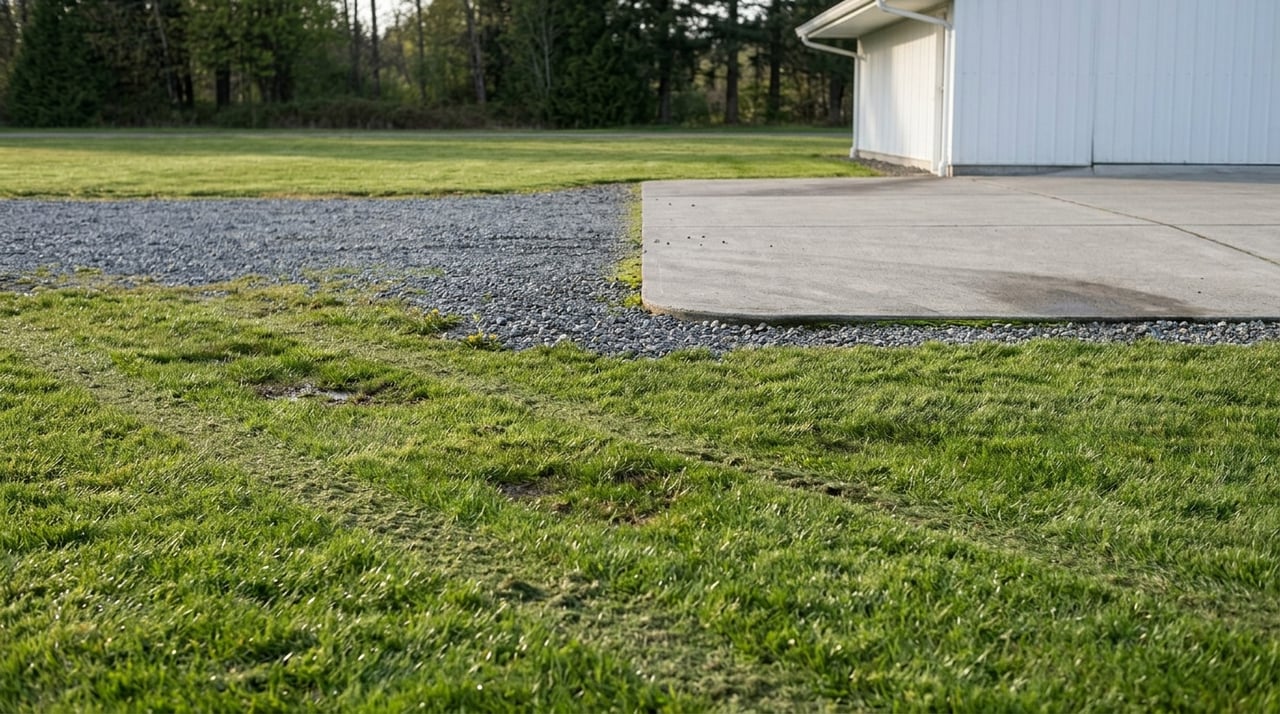
One of the defining features of Workman is its turf runway. That is a major lifestyle and operational difference compared with a paved airport environment.
FAA guidance notes that some aircraft and activities are especially well suited to grass or unpaved areas, including gliders, powered parachutes, taildraggers, vintage and light-sport aircraft, plus operations involving skis and floats. At the same time, turf surfaces bring more variability than paved runways.
Surface condition, drainage, grading, and load-bearing capability all matter. FAA guidance emphasizes smooth grading, drainage, and keeping non-essential objects out of operational areas, while pilot guidance cited in the research notes that wet grass can lengthen takeoff rolls and soggy fields may be rough or temporarily unusable.
Questions To Ask About the Runway
If you are considering a home at Workman, ask practical questions such as:
- How is runway maintenance handled?
- What are the community expectations for use and upkeep?
- How does seasonal weather affect field condition?
- Are there lot-specific access or taxi considerations?
- What operating habits do current owners follow because of Aurora’s nearby airspace?
These questions help you move from the idea of airpark living to the reality of day-to-day use.
Hangars and Storage Need Confirmation
If your goal is to store an aircraft on site, confirm what is allowed on the specific property. FAA guidance says the primary purpose of a hangar is aircraft storage, and permissible aeronautical uses include storing active aircraft, maintenance or refurbishment, and related tools and materials.
At privately owned facilities, the owner or operator may impose restrictions. In other words, general hangar guidance is only part of the picture. You will still want to verify what the HOA and property-specific conditions allow before assuming a hangar can be added or used the way you expect.
Financing Can Be Less Straightforward
Workman Airpark homes can be more challenging to finance and appraise than a conventional home in a standard subdivision. The research report notes that appraisals rely on similar sales and that unique properties can be harder to value when there are unusual features or limited comparable sales.
That issue is especially relevant at Workman because the community is small, with only 24 homes according to the HOA. A small inventory often means fewer recent comparable sales, and the buyer pool is more specialized.
Lenders and appraisers may also look closely at access, easements, and maintenance obligations. Fannie Mae appraisal policy says reports must identify primary access and address non-typical access or privately maintained streets with legally enforceable agreements. In an airpark setting, runway easements, HOA rules, and shared maintenance responsibilities may become part of the financing file.
Financing Questions Worth Asking Early
To avoid surprises, consider asking these questions at the start:
- Has the lender handled airpark or other niche property types before?
- Are there recent comparable sales the appraiser can use?
- What documentation will be needed for easements, access, or private maintenance?
- If you plan improvements, will that affect underwriting or appraisal review?
Early clarity can make the process smoother and help you plan your next steps with confidence.
Resale Works Differently Too
A Workman home is part residential property and part aviation lifestyle property. That affects resale.
Because the community is so small, the resale market is naturally niche. Value may depend heavily on aviation fit, direct runway access, hangar potential, and whether future buyers and lenders are comfortable with the property type.
That does not make resale a negative. It simply means resale is more specialized. The buyer most likely to value a Workman property is not every rural-home shopper. It is someone who wants the specific benefits of a small, HOA-governed turf airpark.
Workman in the Regional Aviation Picture
Workman sits in an active south-of-Portland aviation corridor rather than in isolation. Oregon’s valley-airports information identifies Aurora State Airport as the largest Willamette Valley state airport, and it also lists airports such as Mulino, Independence, and Lebanon as part of the broader regional network.
Aurora is a paved, towered airport with a 5,004-foot runway and a much larger operational profile than Workman. Mulino also serves general aviation with a paved runway and significant annual activity. That regional context helps explain why Workman may appeal to buyers who want residential runway access while staying connected to a broader aviation map.
The FAA location identifiers also list both Workman Airpark and Dietz Airpark in Canby, showing that the area already has multiple private-airport references. Other private-airpark comparables in the broader region include places like Chehalem Airpark and Lenhardt Airpark. When buyers compare these options, they often focus on runway surface, runway length, easements, taxi access, hangar potential, and lender comfort.
Who Workman May Fit Best
Workman is best understood as a small turf airpark community for owners who want direct runway access and a resident aviation setting. It may be a strong fit if you value the airpark lifestyle itself and are comfortable doing more specialized due diligence than you would with a standard home purchase.
It may be less ideal if you want a conventional rural property with simpler financing, more straightforward resale comps, or fewer land-use questions tied to airport operations. The key is not whether Workman is good or bad. The key is whether it matches how you plan to live and use the property.
Smart Steps Before You Buy
If you are serious about a Workman Airpark home, a careful review process can save time and stress later. A few smart steps include:
- Review HOA documents, easements, and CC&Rs early
- Confirm runway access and lot-specific use details
- Check Clackamas County overlay rules for planned improvements
- Ask detailed questions about turf runway maintenance and conditions
- Talk with your lender about the property’s niche characteristics before you write an offer
- Evaluate the home as both a residence and an aviation asset
A calm, organized approach matters even more in a niche market like this. When you understand the moving parts up front, you can make a much more confident decision.
If you are exploring Workman Airpark or other aviation properties in the Willamette Valley, Stacey McGhehey can help you sort through the details, ask the right questions, and move forward with steady guidance. Smile! Relax! Enjoy!
FAQs
What is Workman Airpark in Canby, Oregon?
- Workman Airpark, OR41, is a privately owned private-use airfield about four miles south of Canby with 24 homes on one-acre lots and direct access to a shared turf runway, according to the HOA and FAA/AirNav data.
What makes a Workman Airpark home different from a regular rural home?
- A Workman home is tied to shared runway access, HOA documents, easements, and county airport overlay rules, so ownership involves more aviation-specific due diligence than a typical rural property.
What should buyers know about the Workman turf runway?
- The runway is turf, not paved, which can suit certain aircraft well but also means surface condition, drainage, and seasonal field usability are important factors to understand.
Do Clackamas County rules affect Workman Airpark properties?
- Yes, the county’s Private Use Airport and Safety Overlay Zone can affect what structures and improvements are allowed near airport surfaces, including items like hangars, fences, and antennas.
Are hangars automatically allowed at Workman Airpark homes?
- Not necessarily, because buyers should confirm what is allowed by the HOA, the specific lot, and county rules before assuming a hangar can be added or used as planned.
Is financing a Workman Airpark home harder than financing a standard home?
- It can be, because unique property features, limited comparable sales, and shared access or maintenance documents may lead to closer lender and appraisal review.
How does resale work for Workman Airpark homes?
- Resale is more niche because the community is small and the buyer pool is more specialized, with value often tied closely to aviation fit, runway access, and lender comfort with the property type.