If you have ever dreamed of taxiing from your home to a private runway, buying at Sunset Airpark can feel like a rare opportunity. It can also come with more moving parts than a typical home purchase, especially when runway access, hangar rules, and county overlays all matter. The good news is that with the right questions and clear due diligence, you can buy with more confidence and fewer surprises. Let’s dive in.
What Sunset Airpark Is
Sunset Airstrip, identified by the FAA as 1OR3, is a private-use grass airstrip about one mile southwest of North Plains in Washington County, Oregon. County planning records identify it as one of the county’s private-use airports, and the county uses a special overlay framework to help preserve its continued operation.
This is important because buying here is not just about the house. You are also buying into a very specific land-use and access environment that affects how the property works, how you use it, and how it may appeal to future buyers.
Why Sunset Airpark Feels Different
Sunset is not just a neighborhood near a runway. Planning records describe a long-standing airpark pattern tied to nearby subdivisions, including Sunset Orchard Estates and Air Acres, with recorded restrictions and easements that connect residential lots to the airport environment.
In plain terms, that means you should expect more than a standard residential title review. The value of a property here may depend heavily on whether runway and taxi access are clearly documented and transferable.
Understand the Runway and Operations
Sunset has a 3,050 by 200 foot turf runway, designated Runway 6/24. Airport-directory data lists right traffic for Runway 6, left traffic for Runway 24, and a traffic pattern altitude of 500 feet AGL or 700 feet MSL.
The field is private use, and permission is required before landing. The airstrip has no control tower, no published instrument procedures, and no on-field aircraft maintenance services. If you fly IFR, you should expect to rely on nearby airports for instrument access and plan around visual operations at Sunset.
Because this is a grass-field operation, runway condition matters. Before you write an offer, ask how field conditions are monitored, what happens during wet periods, who decides when the runway is too soft for use, and what seasonal limitations you should expect.
Runway Access Is Not Automatic
One of the biggest points buyers need to understand is that owning a nearby home does not automatically give you runway access. Washington County’s Residential Airpark Overlay District supports residential airpark-type development, but the code does not create access rights to the strip by itself.
Access must be obtained from the airstrip owner. That means a home can look like an airpark property on paper or in marketing, but the real question is whether recorded easements, agreements, or other documents actually give you the use rights you expect.
How the Overlay Affects Your Property
Washington County uses more than one overlay that affects Sunset. The Residential Airpark Overlay District exists to support the airstrip’s continued operation and the uniqueness of this kind of residential development.
There is also a Private Use Airport Safety Overlay District. That safety overlay limits structures or trees that would penetrate the airport’s protected imaginary surfaces, which can affect what you build, where you build it, and how tall improvements can be.
This matters if you are thinking ahead about a shop, antenna, tree growth, or future additions. Even a property that feels spacious may have aviation-related limits that do not show up in a typical neighborhood search.
What to Know About Hangars
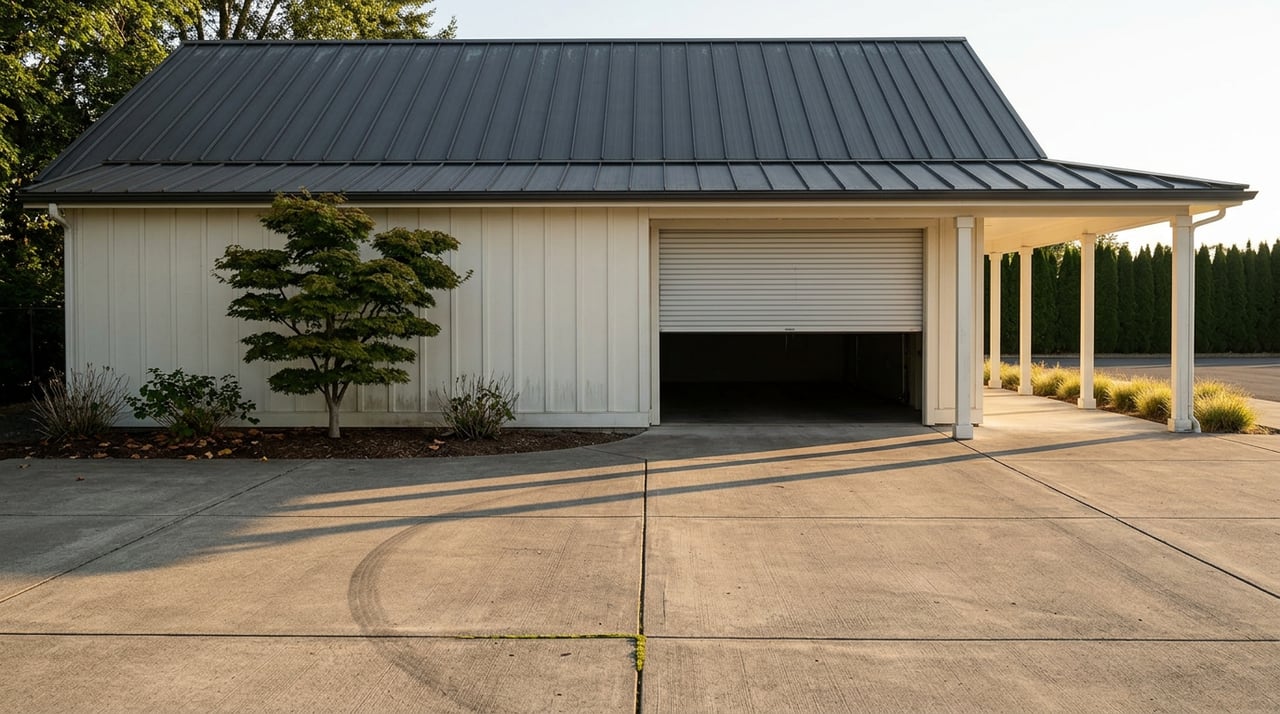
For many buyers, the hangar is just as important as the house. Under current Washington County code, Residential Airpark Development can allow one hangar and a paved tie-down area on the same lot as an existing detached single-family dwelling.
The hangar may be attached or detached, but there are limits. Hangars may not be rented out, and the code generally ties that hangar right to an eligible lot with an existing detached home.
That means you should verify a few things early:
- Whether the parcel already has an existing detached single-family dwelling
- Whether the lot is eligible under the applicable zoning and overlay rules
- Whether a hangar already exists and was properly permitted
- Whether a future hangar location fits the site and height restrictions
- Whether the paved tie-down area is already approved or needs review
Due Diligence Before You Write an Offer
Buying at Sunset Airpark calls for deeper review than many residential purchases. Clean documentation and operational clarity can matter just as much as the condition of the home itself.
Here are the key items to request and review before you commit:
- Current FAA or airport record information for 1OR3
- Recorded plat
- Preliminary title report
- CC&Rs, deed restrictions, or restrictive covenants
- Easements for runway or taxiway use
- HOA, association, or corporate governance documents if applicable
- Any airport sponsor rules or operating requirements
- Permit history for hangars, taxiways, and related improvements
- Any history of height variances or land-use approvals
You should also ask whether the seller can show documented, transferable runway access. That single issue may have a major effect on usability now and resale later.
Questions Buyers Should Ask
A smart Sunset Airpark purchase starts with specific questions. General real estate questions are not enough in a niche aviation setting.
Bring these questions into your showing and offer process:
Is runway access documented?
Ask whether the lot includes recorded easements or agreements for runway and taxiway use. If access depends on a future arrangement rather than existing recorded rights, that is a major distinction.
Can I build or keep a hangar?
Confirm whether the lot qualifies for a hangar under current county code. If a hangar already exists, ask for permit records and verify that the structure matches what was approved.
Are there use restrictions?
Ask for current CC&Rs, deed restrictions, and any community rules. These may affect aircraft storage, lot improvements, or other property uses tied to the airpark setting.
What happens in wet weather?
Because the runway is turf, seasonal drainage and softness matter. Ask how wet-weather operations are handled and what maintenance routine supports the strip.
Are there height or obstruction limits?
Verify whether trees, antennas, shops, or other future improvements could conflict with the airport safety overlay. This is especially important if you plan to customize the property.
Why Documentation Matters for Resale
Sunset Airpark serves a niche buyer pool. That can be a real advantage when your property has clear documentation, usable access, and compliance with the county framework.
From a resale standpoint, the biggest value drivers are uninterrupted runway access, clean title to easements, and compliance with height, access, and compatibility rules. Buyers in this market tend to look closely at operational clarity, not just curb appeal.
If two similar homes come up for sale, the one with stronger paperwork and fewer unanswered access questions may stand out faster. That is one reason careful upfront review matters so much.
How to Buy with More Confidence
The best approach is to treat a Sunset Airpark purchase as both a home purchase and an aviation-use review. You want the home to fit your lifestyle, but you also want the airpark features to be legally, practically, and operationally sound.
That means slowing down enough to verify access, permits, overlays, and restrictions before you finalize terms. A calm, organized process can help you avoid buying assumptions instead of actual rights.
With niche properties like this, clear guidance makes a difference. If you are exploring homes at Sunset Airpark or comparing aviation properties in Washington County, Stacey McGhehey can help you stay organized, ask the right questions, and move forward with confidence. Smile! Relax! Enjoy!
FAQs
What is Sunset Airpark in North Plains, Oregon?
- Sunset Airstrip, FAA identifier 1OR3, is a private-use grass airstrip about one mile southwest of North Plains in Washington County.
Does buying a home at Sunset Airpark automatically include runway access?
- No. Washington County code supports residential airpark development, but runway access must be obtained from the airstrip owner and should be confirmed through recorded documents.
What kind of runway does Sunset Airpark have?
- Sunset has a 3,050 by 200 foot turf runway, designated Runway 6/24.
Can you build a hangar on a Sunset Airpark property?
- Under current county code, an eligible lot with an existing detached single-family dwelling may allow one hangar and a paved tie-down area, subject to the applicable rules and approvals.
Can a hangar at Sunset Airpark be rented out?
- No. The current Washington County code says hangars in this residential airpark framework may not be rented out.
What documents should buyers review for a Sunset Airpark home?
- Buyers should review the title report, recorded plat, CC&Rs or deed restrictions, runway and taxiway easements, permit history, and any airport or community operating documents tied to the property.
Does Sunset Airpark support instrument flight operations?
- The airstrip has no published instrument procedures, so buyers who fly IFR should expect to use nearby airports for instrument access and plan around visual operations at Sunset.